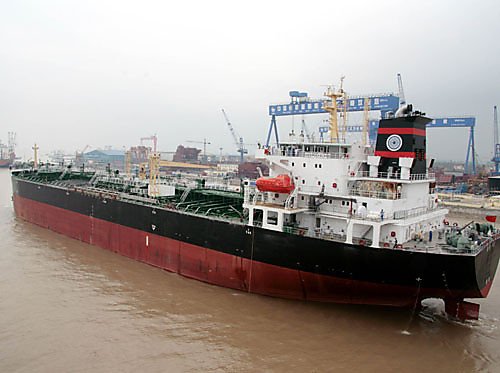
India may well offer silver lining for shipping business

The escalation of India as a world key participant within the shipping sector could well be some years away, given that the country has the capability to be considered a secondary “China”, concerning encouraging seaborne call for supplies, chiefly coal and iron ore, not to mention energy-related products. If one has a closer look at the most up-to-date country emphasis from the International Energy Agency (IEA), they will understand that India is heading onto the center stage of worldwide energy earning top spot in terms of coal utilization, oil demand enlargement plus solar PV output. Since one can easily understand it is the first two that are of special interest to the shipping market, with coal absorption somewhat essential for the dry bulk economy and also oil demand progression for the tanker business.

Within the latest weekly report, shipbroker Allied Shipbroking mentioned that “the cause for most of this is actually the speedy rise in energy usage anticipated to happen among its 1.3 billion population, a factor that is fairly effortless to feed for such spectacular growth levels over the next few years considering that 240 million of them are now living in rural locations lacking electric source, while at the same time it seems to have one of the best advancement values in new vehicle possession. Those two will prove as influential factors pushing a near to 30% rise in coal and also oil intake by 2020”.

Allied’s George Lazaridis, Head of Market Research & Asset Valuations, told us that “coal is India’s fundamental energy source that represent 40% of its energy mix while taking its position as third major maker and consumer across the world. Considering India is expected to keep its coal-cantered energy tactic inspite of the global “green” pres-sure and making an allowance for the increased demand it's going to have for power capacity and electricity generation it's going to be interesting to see where it's going to turn to serve its requirements on condition that in due course it will find its inner production and also reserves inferior to keep pace with its maturing appetite. This means that despite the fact that its impact on seaborne coal trade may perhaps stay capped as it takes on efforts to elevate its inner production, if its surge in demand keeps on track with what it is now it wont be long before it takes up and holds the lion share in the marketplace. It is worth speaking about that this year so far it has currently exceeded Chinese imports using up 20% of the coal business this season, due to the more supple demand from the prior sector head, particularly China”, he pointed out.

In the meantime, “things however are really different in regards to oil, as India depends primarily on imports to take care of both its consumer and commercial requirements. With over 260m passenger cars anticipated to be added to its existing car ownership over the next 25 years and with its field set to take a more notable role in the world stage, presumptions are for a similarly positive surge in need for both crude oil as well as, if not more so in oil goods. The only real problem is its prime area, based substantially nearer to the main Middle Eastern producers then any of the OECD members or China. Which indicate that the benefiting tonne-miles will be fewer, although at the end of the day any boost in high demand is always welcome”, Lazaridis claimed.

So, exactly what are the plausible dampeners to such advantageous cases? “Well for one you are always faced with the possibility of policy control which may be brought about by international environment concerns. This is specifically a worry for coal, which might come about through either a demand for India to decrease it reliance or perhaps through other significant consumers moving away from their reliance upon this “dirty fuel”. On the side of oil it appears to be the largest dampener might be technology, with present developments moving towards more environmentally friendly modes of transportation. Even so, it appears as if there's still something to keep us positive for the future”, Allied’s analyst determined.

World-wide Removals Giant Begins Best-in-Business ‘Man and Van London’

36-year-established intercontinental moving company, Anglo Pacific, has recently announced ‘Man and Van London’. This back-to-basics service has got the support of DBS-checked drivers and British Association of Removers (BAR) membership.


Steve Perry, Initiator and Chairman of Anglo Pacific, states, “The capital is inundated with ‘man and van’ solutions but it’s very much an instance of caveat emptor, customer warning, for if you think maybe it’s expensive to hire a professional, wait until you hire an amateur. To be able to be certain of who you are allowing into your household, and exactly how capable they may be of packing and moving around your valued property, and naturally a company to turn to should things be unsuccessful, you’d be smart to select a fully-bonded industry organisation member for instance Anglo Pacific in contrast to picking up a small ad on social media sites.”

Steve proceeds, “All of our Man and Van London workforce are skilled industry experts hired from inside the moving trade and security checked out through Disclosure and Barring Service - something most people still refer to as a CRB check, its original name. They are all uniformed, well-mannered, courteous, and use the same professional packing products we use in multinational relocations. Furthermore, our sign-written vehicles are equipped with Masternaut tracking so we can monitor the location, arrival and departure times of our teams - providing the client a secure feeling and reliable pricing. It's not your general Man and Van service; our company offers vast added value and peace of mind.”

Man and Van London from Anglo Pacific is made to suit London-based flat moves, student moves, small-scale office relocations, house clearances, and domestic appliance, artwork and furniture deliveries - anything from just one to five items to the contents of a petite household. Charges are affordable, and applied in quarter-hour increments, from £60+VAT/hour for one employee as well as Sprinter van for one to five products and from £80+VAT/hour for a couple of workers together with a Luton Transit for bigger challenges. Rates start from arrival at the pick-up location to departure from delivery address (minimum two hours). An instant price check can be obtained via the internet: Anglo Pacific

Clients can opt to self-pack, with packaging supplies shipped in advance, or invest in a full professional packaging service. Moreover, if short-term storage is a problem, Anglo Pacific posseses an large safeguarded, fully covered by insurance, facility in NW10 at its worldwide removals HQ and can supply cost-effective storage from only £16.50+VAT/week for a 250 cu ft module. Objects can be collected from clients’ homes at 48 hours notice. 


Shifting To Australia - Resources And also Methods For Moving

When you get to Australia, it may take time for you to acquire your first house to rent or buy. Most likely you're able to remain with family initially on the other hand in all likelihood non permanent accommodation could be essential.

Sometimes there are less residences out there for rental and you might will have to apply for a variety of rental places just before solidifying your own personal apartment.

Which means you might need to extend in your non permanent places to stay so make sure your accommodation company has flexibleness. One tip could be to book for 3-4 weeks after which extend your stay after you have landed as well as your household effects have cleared customs (normally about 6 weeks).

You will find there's number of momentary hotels accessible for instance: hotels, serviced apartments and temporary accommodation which include furnished rental apartments and holiday rental homes.

The past Ten years has witnessed big rise in Short stay serviced apartments for just one really good reason: families and longer stay business customers demanded extra space, cooking facilities and laundry facilities.

Serviced apartments vary from hotel style apartments operated by famous hotel brands to straightforward serviced apartments operated by more recent entrants. The key differences between most of these serviced apartments are generally: size of the house, quality involving food preparation and also laundry facilities and consistency of examining. The retail price might for that reason differ significantly, primarily in the course of peak holiday season, so moving within Dec and January may be costly as the remainder of Australia really likes summer school holiday seasons.

If you prefer to stay in a more peaceful residential surroundings, a furnished property or home may be the best option. You'll save much more on your places to stay fees which could supply you with some more time to discover the proper property. These particular furnished residences aren't house-swaps, nonetheless expertly managed short stay houses that happen to be fully self contained and obtainable for rentals for at least 7 nights.

accommodation is usually organized well ahead of time that will enable you to settle in right before your household furniture and private items turn up.

Website pages along the lines of www.rentahome.com.au offer furnished homes and also flats on the web, along with availability and also property feature search tools. Guests are able to locate, book and pay for housing at almost half the expense of residing in expensive hotels. You can get best price quotes on your period of stay.

The benefits of a furnished home are generally you and your family can be located in suburb locations near to schools, enjoy a relaxed residential form of accommodation. Short-term housing list is priced at a small premium to permanent unfurnished rental properties but are still usually 20-50% cheaper than compared to hotels or short stay serviced apartments.

Most of these furnished homes are being used by entrepreneurs who seek a more individual and peaceful personal space in which they can entertain friends in environment similar to their house. A majority of these homes also are perfect for young families because of the privacy, space, full sized kitchens, washer / dryer perfect for managing a family load of laundry, in addition to the non-commercial atmosphere. Rather than finding yourself in very busy central business district, visitors are now enjoying places to stay in neighbouring inner suburbs since they can investigate the location and property before they arrive.

Assets websites these days present photographs, explanations and phone details online. And also with up to date data you are going to save your time and cash keeping away from calls and awaiting newspapers. Furthermore property web pages can be accessed at any time from a pc hooked up to the net in virtually any part of the world.

There are a number of top hotel and serviced apartment sites which cover a large number of providers. Even so, these web sites generally allow reservations around 4 weeks previous to arrival which may not suit moving families.

Rent-A-Home
gives moving families a good array of accommodation choices for housing.

Five recommendations when selecting accommodation for families relocating to Au:

Confirm the accommodation provides the Property Features you're looking for
Get yourself a Quote for competitive prices for your length of stay and time of the year
Check out the cost of Broadband, Telephone along with other services you might need
Check out the T&C's for Extensions (subject to availability) in addition to Cancellation
Try an
Au designed home and experience the suburb before settling down!


International Shipping to Australia 

A Great International Removals Company Is The Key To A Successful Move Abroad

International Removals

Freight Transport The British Association of Removers (BAR)Anglo Pacific

$7.5b Doha port to solidify Qatar’s standing as global logistics heart

JEDDAH - Determined for completion by 2020, the new Doha port will push the shipping sector forward, double GDP, plus consolidate Qatar’s emergence as the world’s premier producer of liquefied propane.

Carefully positioned at the center of the prosperous Gulf Cooperation Council (GCC) countries, Qatar’s maritime shipping and delivery trade has gone through significant transformational modifications and has started to take off. Back to 2010, the government revealed a bold six-part proposal to create a brand new and contemporary port on the coast near to the capital of Doha.

With a combined population in excess of 47 million and also yearly financial output topping $1.6 trillion (£1 trillion), the six GCC countries Bahrain, Kuwait, Oman, Qatar, Saudi Arabia and the UAE, encompass a powerful block of open and integrated financial systems at a essential crossroads of the international economy, among Asia, Europe, Africa and the Americas. With regard to universal trade, especially maritime transportation, the Middle East provides lucrative opportunities for companies that are able to use the region’s emergence as a universal logistics centre. In 2014, Qatar, UAE, Oman, Jordan, Saudi Arabia and Kuwait placed highest out of 45 emerging markets countries within the key category of “market compatibility,” outlined by an simplicity of doing business.

As the region has become an ever more essential point in multinational shipping and trade, Doha has set itself apart from several other logistic hubs like Dubai by simply investing greatly in efficient modern infrastructure. Qatar’s maritime ports are in the process of important expansion. National project spending is expected to top $100 billion throughout infrastructure, real estate and other energy and non-energy sectors throughout the following decade, as outlined by research from the Investment Bank of Qatar.

The new port project alone is the reason for $7.5 billion of this spending. Formerly targeted for completion in 2030, planners have sped up the timeline and supplied the resources to remove 10 years from the construction timeline, accomplishing all six phases of the venture in the following five-years.

“By 2016 a state-of-the-art world-class port will be completed,” explained Sheikh Ali bin Jassim Al Thani. “Qatar offers what other GCC nations can’t offer since they don’t have the assets to do so. The new port provides customers with readily available gas and electricity, personalized warehouses and distribution centers, multi-purpose warehouses, third party logistics (3PL), a contemporary and high-tech data center, a great container yard, as well as a transport service store. Moreover, they will likewise have refrigeration services, chilled services as well as dry spots for all those goods that need to stay away from humidity.”

With the preliminary stage completed in 2016, the modern Port will consist of 3 terminals with an ultimate combined yearly capacity over six million storage containers. The project will not only accommodate the expected boost in container traffic, but also support normal cargo traffic, motor vehicle imports, livestock imports, mass grain imports, foreign support vessels, coast guard vessels, plus a marine support unit. Follow-up assignments include high-value and sophisticated production facilities for the creation and repair off offshore and land-based petrochemical constructions, and then for the development, maintenance and repair of high-value modest, medium and large boats. The port plan envisages a hub for restoration, conversion and construction of all types of crafts, such as tugs and workboats, military vessels and high-value compact ships for example private yachts, to the largest vessels across the globe.

All of this comes in addition to the state-of-the-art shipyard that has recently been constructed by Nakilat - Qatar’s state owned shipping and delivery business which operates and handles vessels along with delivers shipping and marine-related services. The Erhama Bin Jaber Al Jalahma Shipyard in the Port of Ras Laffan was launched in 2010, marking a milestone not only for Nakilat, but also for the whole maritime field in the country.

“It is a $2.8 billion state-of-the-art facility for ship building and repair, and the overseas community has given it a strong evaluation in terms of development and quality,” revealed Abdullah Al Sulaiti. “Now we have the ability in Qatar to build a wide range of boats, either industrial or commercial, when I suggest ‘commercial’ I am talking about top quality luxurious yachts. In fact, we are at present making two 72 meter luxury yachts; the first one is going to be sent at the conclusion of next year. It’s a major moment for Qatar’s very young ship building market and to discover such capability available in the country in such a short time frame makes me rather proud of what is being accomplished.”

Along with the world-class shipyard already operational at the Port of Ras Laffan combined with the planned developments in Doha, Al Thani says that when all projects are concluded, other regional shipping and logistics players won’t be able to contend with Qatar.

“Dubai, for example, won’t be able to contest with this level of service in providing such a facility. Qatar is rising up that marine shipping pipeline. We will carry on being a powerful player and in the long run we will go beyond them.”

Aiming to captivate yet further overseas financial investment, the authorities has arranged a distinctive economic zone adjacent to the newest port in Doha. The Qatar Economic Zone 3 (QEZ3), will be a self-contained development with industrial and residential amenities and growing a vital link within the country’s strategic economical objectives. The QEZ3 will even serve as a transportation and trade entrance into Qatar and provide financial hub around the Port for manufacturing, shipping and commerce across numerous industrial areas, establishing import in addition to export synergy.

What’s more, the Doha port venture dovetails with Qatar’s emergence as the world’s major producer of liquefied natural gas (LNG). Within just 20 years, Qatar has converted itself into the world’s primary provider of LNG, giving approximately a third of all overseas commerce.

Posted 543 weeks ago

Hefty baggage: When is it worth the cost to ship them?

You are packing products for a business presentation or simply a skiing voyage, and you are aware your travel luggage is going to tip the weighing scales.

Would you plunk down the cash airline carriers ask for in cases where bags is over weight, or is it best to ship your weighty suitcases in its place?

Feelings are relatively strong, whatever side you believe.

“If it’s only a few lbs too heavy, it is advisable to move out 5 pounds and put it into your cabin case,” claims George Hobica. “Then again in most cases, it can be more cost effective to ship it. You will find very few (instances) where it’s more valuable to pay the airline carriers, considering that the excess weight premiums are rather onerous now.”

Based on an airline comparison done by Airfarewatchdog, overweight baggage costs on domestic aircraft can soar as high as $200 one way for a case between 71 and 100 pounds.

United Airlines, for example, charged $100 for a bag weighing in between 51 to 70 pounds on domestic air flights as of late March, $200 for bags weighing 71 to 99.9 lbs, not to mention $400 on most international routes.

Spokesman Rahsaan Johnson reveals the price ranges are “ as good as what shipping organizations command for objects of comparable size and weight.”

Nevertheless Richard Yamarone, an economist who resides in Maplewood, N.J., mentions shipping is frequently less costly, and it is just what he regularly prefers.

“Ship away your pain,” announces Yamarone, who vacations regularly for work, or even to follow his pastime of fly fishing. “The moderately inexpensive of delivering hefty gear, equipment, garments, footwear and even outerwear is well worth it. All that you should do is get on the aircraft along with your iPhone, understanding that all your items are waiting for you inside the accommodation or lodge. That is reassurance, and worthy of any expense.

UPS bases its pricing on an item’s weight, the distance it’s journeying and also the transport method the sender decides on, for example ground vs. air service.

Its online cost calculator might help vacationers decide the best offer, which very likely will involve planning to ship your travel luggage a long time before your trip, and deciding ground distribution.

"Certainly, if you wish to overnight an item, that will cost you a lot more than ground cargo,” declares Chelsea Lee.

On the other hand, she states, “if you could prepare yourself, or know you always take a heavy case, you will most definitely have a cost savings rather than forking out the oversize fee. A week or so ahead of time can often mean huge cost savings.”

Vacationers might have their luggage transported to their destinations, Lee declares.Travelers can place their suitcases inside the container, or pack their clothing and personal items directly within, saving cash on weight, because an empty travelling bag, typically, weighs about 10 pounds. The luggage containers, on the other hand, weigh around 3 or 4 pounds.

Dispatching the small luggage container, which could support 55 lbs, via ground from Los Angeles to New York City, is $79.55, Lee claims, and it would cost $47.99 to deliver the same package from Chicago to New York.

A large luggage container, which can support 85 lbs, would cost the sender $102.75 for ground delivery from Los Angeles to New York City, and $76.15 out of Chicago to New York City.

“If you already know you have got your family get-away, and you know anything that your family requires, especially if you have youngsters, shipping and delivery could possibly be something to review.”

Tony Tillman, who trips the country training organizations on software and lives in Burbank, Calif., reports that he comes to a decision on whether or not to ship or check excess bags determined by when he requires it and just how much it is going to cost him.

“Quite often, shipping charges is less expensive than air travel prices, and sometimes, it’s not,” Tillman declares, adding that shipment becomes a personal expense, due to the fact his company won’t pick up the price.

Still, if he has a little bit more clothing or footwear that make his luggage over the 50-pound mark, when excess prices usually kick in, he’ll commonly opt for shipment.

“If I’m paying out $90 at the air carrier to have this additional case or more weight,” he tells, “I’d rather have it where It’s possible to write it off as a business expense,” he states.

But Michael Gregurich, an additional frequent business vacationer, declares shipping cases isn’t worth the inconvenience.

“Even though extra weight rates are astonishing, the challenges with mailing cases is still greater,” says Gregurich, a sales director who resides in Manitowoc, Wis.

Shipping, he states, is a dilemma if he really wants to pack another item at the last minute or needs to remove something from his travelling bag.

Clarissa Cervantes, a professional photographer and researcher who lives and works in Beverly Hills, says that her gear has often made her luggage heavy, together with every one of the gifts she tends to purchase when she journeys abroad. Still, she would rather cope with the air travel prices than ship.

“I’ve checked out the price; it is simply not worth it,” she states. “It takes much more efforts, and it’s less convenient as having the airline transfer the bags on your behalf.”

Posted 548 weeks ago

Hyundai goes ‘eco-friendly,’ transfers autos over ocean

Hyundai Motor Company is from now on making use of boats to transfer its vehicles over domestic markets to decrease expenditures decreasing carbon footprint.

Roughly 800 vehicles had been placed on the M.V. IDM Symex, a roll-on-roll-off (RoRo) vessel, at the Chennai Port on Saturday. The Hyundai vehicles will be unloaded at Pipavav Port in Gujarat, Chennai Port Deputy Chairman Cyril C. George acknowledged.

Even so Hyundai had been making use of Chennai Port for forwarding hyundai vehicles, this is the initial time that it’s carrying its freight across the sea for domestic market.

Trade sources claimed it takes in most cases three to four days for the vehicle producer to transfer cars out from the development facilities near Chennai to Gujarat region via trailers.

On the other hand, shipping and delivering them can be considered environmentally friendly and in addition inexpensive given that the Centre had assured to offer encouragement of Rs.3,000 for every single car to the individuals making use of coast trail.

Discussing with The Hindu, Mr. George had said: “It is an additional campaign of the Mission Resurge - Chennai Port. Moreover it is in line with the Shipping Ministry’s plan of promoting ocean shipping and delivery, controlling carbon foot print plus responding to the traffic jams matter at the port. Also, it is the first time that vehicles are now being transferred from the east coast to west coast.”

Subsequent to flagging off the very first service, Chennai Port Trust officers are even meeting with alternative OEMs most notably Nissan as well as Ford to start making use of coast for carrying hyundai cars.

“To promote the OEMs to use our services, we have declared a flat wharfage charge of Rs.500 every small motor and Rs.2,000 for large cars. Also the wharfage for RoRo vessels employing coastal course has been lowered by 40 percent of conventional tariff. This judgement was taken in a day,” announced Chennai Port Chairman M.A. Bhaskarachar.

Kamarajar Port, that fairly recently overtook Chennai Port on car exports, is equally pondering in a corresponding route. “Normally, coal, fertilizers, iron ore, petroleum merchandise and also cement are moved from one port to an alternative. Finally, we are requesting the OEMs to move vehicles from southern ports to western ports. This could lead to eliminating significant number of trailers off road, lower carbon footprint and also fuel usage,” Mr. Bhaskarachar announced.

Posted 551 weeks ago

Four Simple steps to Make International Shipping Straightforward

Trading cross-border has become significant moneymaker for firms as well as small businesses likewise - individuals purchasing from overseas countries around the world spend twice as much as domestic consumers. Moreover, 70 percent of the world’s purchasing power is right now away from the United States of America. But less than 1 percent of U.S smaller businesses export, and of those that do, 58 % exclusively export to one country. Still, a lot of retailers consider the concept of exporting overwhelming.

Growing internationally doesn’t have to be the hair-raising prospect many small business owners fear it to be. Institutions including Export.gov and the International Trade Administration supply one-on-one counselling to small businesses. And in the ever expanding global market, all owners should really be looking to find new sales channels international.

Listed below are four simple actions to make overseas shipping a piece of cake:

Always check your shipping containers
Literally - Export.gov contains a quiz to help small business owners review their ability for global exchange. Before you decide to maximize merchandise and also begin hiring, you should check it out to be sure your item can be sold internationally, assess average shipping rates and better understand any constraints you may be distracted by.

Research regulatory specifications
One of the more frequent queries dealers have is whether a specific permit is required to sell to foreign countries. For the majority of exporters, the answer is no. Those who do need a permit are often trading products that have a double industrial and military use.

Furthermore, there are particular products which cannot be shipped around the world under most circumstances and are susceptible to much closer critique, among them alcohol, firearms, fresh fruits and vegetables, as well as nail polish.

Navigate the oceans of customs and shipping
All intercontinental shipments should pass through customs. To help prevent problems, stay organized with regards to your documents. This means affixing the customs documents to the surface of the box and being completely truthful in declaring contents. Avoid surprise costs by calculating duties. When it comes to shipping and delivery, there are a number of carriers that ship across the world.

Don’t make buyers depart your site for basic information
Overseas buyers need to know just how much items will cost them in their own currency. In case you don’t make this information readily available to them, they may have to leave your website to find it - and so they may not return. Whether shoppers have an option to scroll through a drop down menu to convert the prices or you list them inside a item description, having that information easily obtainable will help close sales by keeping it easy.

Posted 553 weeks ago

India can potentially provide silver lining for worldwide shipping field

The advance of India as the worldwide key participant inside the international shipping sector might be only a couple of years away, as the country has the possibilities to turn into a second “China”, concerning encouraging seaborne interest for items, commonly coal and also iron ore, along with energy-related items. If one has a closer look at the recent country target from the International Energy Agency (IEA), he’ll almost certainly see that India is heading to the main stage of worldwide energy earning top spot with regard to coal intake, oil demand enlargement combined with solar PV output. As you can quickly realise it is the first two that are of precise interest to the worldwide shipping industry, with coal intake relatively vital for the dry bulk sector plus oil demand progression for the tanker industry.

During its most recent weekly report, shipbroker Allied Shipbroking mentioned that “the reason for the vast majority of this is actually instant surge in energy utilization anticipated to come about amidst its 1.3 billion population, an issue that is fairly effortless to feed for such awesome growth values within the next few years due to the fact 240 million of them are living in rural locations with no electrical power, although at the same time it seems to have one of the greatest growth amounts in brand new vehicle possession. These two will prove as influential factors propelling a close to 30% surge in coal and oil usage by 2020”.

Allied’s George Lazaridis, Head of Market Research & Asset Valuations, stated that “coal is India’s primary energy source that represents 40% of the company’s energy mix whilst taking its placement as third greatest developer and buyer globally. Considering India is anticipated to maintain its coal-cantered energy method inspite of the global “green” pressure and making an allowance for the raised demand it will have for power capacity and electricity generation it’ll be informative to watch whereby it’s going to turn to serve its needs considering the fact that ultimately it is going to discover its inner production and also reserves inadequate to keep pace with its increasing appetite. Which indicate that despite the fact that its impact on seaborne coal trade might remain capped as it assumes endeavours to raise its internal production, if its increase in demand keeps on track with what it is now it will not be long before it takes up and holds the lion share in the market. It is also worth discussing this year to date it has currently surpassed Chinese imports using up 20% of the coal trade this year, a result of the more supple growing demand from the earlier market leader, specifically China”, he mentioned.

At the same time, “things however are pretty different on the subject of oil, as India depends primarily on imports to take care of both its consumer and business demands. With over 260m voyager cars expected to be added to its current car ownership across the next 25 years and with its field set to take a far more notable role in the world stage, presumptions are for an equally high rise in need for both crude oil along with, if not more so in oil items. The only problem is its prime location, located much closer to the main Middle Eastern suppliers then any of the OECD members or China. Which means that the benefiting tonne-miles will likely be much less, although at the end of the day any improvement in high demand is definitely welcome”, Lazaridis mentioned.

So, consider some of the probable dampeners to such impressive circumstances? “Well for one you’re still up against the danger of policy management which can be brought about by global environmental fears. This is particularly a worry for coal, that might take place through either a pressure for India to lower it reliance or even via other key consumers moving far from their attachment to this “dirty fuel”. On the side of oil it appears the biggest dampener may very well be technologies, with recent developments moving towards more eco-friendly modes of transport. Having said that, it appears as though there’s still something to keep us optimistic for the future”, Allied’s analyst concluded.

Posted 559 weeks ago

Will smaller be the new big when it comes to container vessels?

Supersize me?

Ever since container vessels were originally created in the 1950s, shipowners plus shipbuilders have been tirelessly generating much larger vessels in a bid for elevated cost effectiveness.

The container vessels have increased in proportion from holding less than Five-hundred 20 foot shipping containers, better-known as 20 foot equivalent units (TEUs) in the industry, to carrying around 20,000 in today’s times.

Yet this arms race has increased the stress of overcapacity first from a slowing boost in the degree of intercontinental commerce.

Container shipping rates are tumbling and shipping lines are beginning to feel the squeeze. It was highlighted by a revenue alerting from one of the world’s most prevalent transport corporations, late last month.

A Danish provider discussed current market issues have compelled it to chop 4,000 jobs, scale back capacity not to mention discard intentions to create 6 new supersized 20,000 TEU ships.

Is it a short-term blip inside the continual race to level up? Or perhaps is it a turning point of which shows the manufacturing of ever grander ships is no longer driving price savings, but is instead simply just bringing down the shipping premiums ships rely upon?

A shipping consultant, suggest the aforementioned is true:

“Maersk’s downgrade and idling of flagships is a stark reality check for an industry teetering on the side of a return to major profit loss that has thus far only been avoided as a result of lower fuel costs, and could be the prompt for action that is important to cease the rot.”

The situation might yet diminish.

A further shipping consultant shared with fastFT:

“I think it’s revealing - there are more than 70 containerships north of 18,000 TEU on order, with slightly more than 30 on the water, so the there’s currently a long tail for the upsizing development which is yet to be noticed.”

But while it’s mostly the modern, larger vessels fuelling the overcapacity, the scaled-down vessels may very well be ones to become affected. He adds:

“We assume the bigger concern is possibly the tonnage that gets displaced as a result of these grander vessels. Worldwide fleet is growing to be slightly uneven, and unless of course we grow our way out of it - that appears to be unlikely near-term - the pockets of tonnage that get crammed out are sure to come with much bigger problems, primarily for owners left holding the bag.”

Below is a timeline of the way container vessels have developed:

1956 - the Ideal X, a altered World War II oil tanker, manufactures original commercial container-laden, carrying 58 storage containers from Port Newark, New Jersey, to Port of Houston, Texas.

1960 - Sant Eliana develops into first containership to engage in international make trades, sailing from New York into Venezuela.

1966 - SS Fairland rolls out first transatlantic container service, embarking from New York to Grangemouth and also Rotterdam with 400 TEU on board.

1967 - The first purpose-built deep sea container carrier, the 700 TEU Atlantic Span, is fulfilled.

1969 - Shipping journalist Richard Gibney coins the word TEU or twenty foot equivalent unit.

1971 - First totally containerised service in between European countries and Parts of asia launched

1972 - 2,228TEU Kurama Maru happens to be first container carrier of Panamax proportions

1988 - Very first “post-Panamax” container vessel - a ship too great to fit through the Panama canal- is made by Howaldtswerke-Deutsche Werft of Hamburg to transport 4,300 TEU.

1995 - Mitsubishi Heavy Industries ship more than 5,000 TEU

2003 - Earliest container ship bigger than 8,000 TEU manufactured

2006 - 50 year anniversary of containerisation

2014 - Brand new development of seriously large shipping container vessels are complete, with capacity of 19,000+ TEU

2018 - No end in sight. Industry watchers assume 22,000+ TEU boats to be in operation

Posted 564 weeks ago

Moving: Abroad shipping

When relocating to foreign countries, there are 3 options for moving home: depart with nothing, emigrate with a few things, or shift all of your furniture and personal belongings by employing an overseas removals organization. Overseas shipping could very well be tricky as well as time consuming, however the following is top tips on the way to handle it.

Sell it off or ‘sea’ it

An international emigration are invariably very expensive. And the ideal way to trim down charges are to remove all of that 'junk’. Kathleen Peddicord, author and overseas skilled, writes in her post '17 things I wish somebody had explained to me previous to moving day’:

“You are certainly best off not shifting your household pieces and your furniture with you. I would personally recommend you sell everything or give it all away ahead of the move. I wasn’t able to bring myself to do this, now I regret all the difficulty and expenditure linked to relocating a huge house full of furnishings from one country to another.”

Willeter says relocation companies, “…are surely seeing a rise in shorter term assignments more than long term.” Even more reason to pack light.

Nevertheless, repatriating tends to carry more exotic 'baggage’ that’s piled up after a stay in another country, and ordinary items now carry sentimental value for the ordinary repat. When push comes to shove, all of these one-of-a-kind furnishings are often more tough to let go.

Should this be the scenario, shipping internationally is the traditional choice, and contacting a moving company is a must. Willeter confesses that ultimately, repatriates will not experience much of a difference with removal firms when compared with when they expatriated, with the exception of workers saying, “Welcome back.”

Luckily for expats going through the same approach as before, arranging a moving process should be more familiar.

“Understanding that a customer is a 'seasoned expat’ does not always assist with their capability to acclimatise to a new location, however will ideally be a little more ready for the dynamics of the move itself,” he adds.

Here are five best tips

In spite of experience, moving internationally is an important, hard procedure. Overconfidence could be as hazardous as lack of experience. The truth is, expatriates returning home in many cases are confronted with more bureaucratic work that formerly envisioned. Do you know the regulations your home country has got for shifting products back in?
“I have often heard a large number of French clients being surprised by the level of 'red tape’ that even they are confronted by when they come home.”

To help provoke a plan for your move, here are 5 important points to remember:

1. Hire a global shipping organization
Use a relocation firm, or plan for a full-time job. If you wish to do this all on your own, ready yourself to take a few weeks contacting organizations for estimates and filling in paperwork for customs, port paperwork, insurance protection plus more.

You do not understand just how many pieces of paper you produce; you generate an entire stack of paper to accomplish this. But if you use a moving firm, they carry out all that for you.

2. You definitely need insurance cover
On the rare event that a storm strikes the cargo carrier and your container slips into the ocean, again, this is remarkably unlikely, however it has occurred before. Insurance generally covers the complete loss of a container within the agreement.

3. Keep your freight separate
Confusion isn’t the biggest situation, it’s confiscation. If ever the law enforcement come across something illegitimate they will likely take every little thing inside the container, meaning all of your special antique items as well as everything are gone.

It is highly prompted to attempt to fill or rent an entire container when repatriating back home.

4. Remember the middle man
Be sure furniture like exotic lamps, hi-tech electronics along with one-of-a-kind furniture have the vital connections to operate beyond the country where bought. From plug adapters to specific bed sheets, be sure that your ideal setup can be achieved just like it had been in your host country.

5. Make sure you lock up (and unlock)
The best advice for anybody emigrating abroad with shipments en route is simple - don’t pack your property keys in the sea shipment!

Posted 566 weeks ago

LISW propels London to the lead of worldwide shipping

The Steering Group and Board of Advisors want to say thanks to all the speakers, associates, sponsors, event organisers, charitable organizations as well as thousands of shipping industry experts who joined us to make London International Shipping Week 2015 (LISW15) a incredibly victorious event.

The incredible range and quantity of occasions going down and high standard of speakers together with the top notch standard of locations, has yet again driven London towards the center of world shipping.

The event coordinators were honored to have the patronage of Her Royal Highness The Princess Royal, who visited the LISW15 Welcome Reception at Lancaster House along with some of the maritime industry’s foremost people.

LISW15 in addition had the backing of the British Government that proved its dedication to the maritime field by having an world-wide round table conference at 10 Downing Street hosted by the Rt Hon Patrick McLoughlin MP, Secretary of State for Transport.

Ten federal government ministers reduced their journals in the time of Liverpool International Shipping Week to help make themselves available to partake and speak at most of the 120 conventions, panel discussion posts, and seminars that transpired through the week.

To kick-start the week, crucial people in the steering board and associates of LISW’s crucial sponsors joined up with Robert Goodwill MP, Minister for Shipping & Ports, as he started the London Stock Exchange. Besides that for the duration of Monday, a charity golf day at the Walton Heath Golf Club in Surrey was held with income going to LISW’s 5 selected charitable groups.

Many of the additional main highlights included:

• The publication of a Maritime Growth Investigation that strongly suggested the formation of a Ministerial Working Group that the UK Government has taken on board and explained that the Secretary of State will chair its primary gathering.

• The International Chamber of Shipping (ICS) convention which dealt with the repercussions of top ecological restrictions, the migrant recovery disaster together with the employment of women in shipping;

• A reception, collectively managed by the Department of Transport as well as Ministry of Defence, onboard HMS Portland to memorialize global maritime partnership

• The second International Shipowning and Shipmanagement Summit (ISSS) and panel conundrums that explained matters impacting on worldwide ship owners and also ship executives

• ‘Mersey-on-the-Thames’ meeting which reported important investment in the Liverpool City location which allows this regional maritime bunch to remain competitive in the worldwide industry

• The LISW15 Meeting, moderated by the BBC’s Emily Maitlis, that mentioned a number of matters which range from world trade, worldwide governance, advancement and investment

• The Ship Efficiency conference & exhibition - reviewing trends in energy efficiency

• 4.7 million twitter posts were noted during the initial few days of LISW15

• The Gala dinner which was a celebration of the week’s occurrences and a chance for the industry to let its hair down

“I am profoundly proud that London International Shipping Week has been such a huge success and would like to thank absolutely everyone that taken part, hosted and visited the many activities. The maritime field is a crucial part of the global economy giving the way of transport to deliver around 95% of the world’s items,” mentioned Jeremy Penn, Ceo of the LISW Steering Group.

“It’s excellent to understand that events like LISW15 assist to put shipping at the forefront of the minds of world policy makers and legislators,” he added.

As a minimum 15,000 sector frontrunners attended the week of functions which gained substantial press coverage for the sector and featured key endeavours for maritime organizations and regulators to concentrate on and work together in collaboration to solve.

Posted 571 weeks ago

5 Things to Consider When Relocating to the Nordic Countries


1. Adjust to High priced Housing
Although the Nordic countryside might appear to be the very image of solace and natural beauty, an increasing number of residents favor city lifestyle, causing the already significant housing costs to rise even higher. These expenses have experienced a specific increase over the last two years; the high quality of life naturally has its expenses, but there’s been some discussion in the public regarding the potential for a real estate bubble. Whether or not it holds true, anybody about to relocate to the Nordic nations in the near future really should be able to spend a lot more than they might be familiar with for their housing (unless you are from New York or London, of course).

When you find a reasonably priced apartment close to the city center, you should stick to it. After relocating, just track down the closest IKEA and buy some low-priced furniture – or if you prefer more exclusive classiness, there is really no shortage of high-quality (and high price) designer furniture; Nordic countries are better known for their simple and timeless home design.

Supposing you want to live as a hermit in the backwoods, on the other hand, the housing costs are significantly lower. Several municipalities in the north have trouble with the net emigration, that has caused real estate costs to drop in rural locations.

2. Acknowledge the Reserved Character of the Residents
Scandinavians and individuals from Nordic nations in general are generally stereotyped as shy and reserved, and – depending on what you’re accustomed to and just what exact area you relocate to – you may realize that the rumors aren’t completely based on misinformation. If you find yourself in a lift with a native, it is suggested not to start a chat, because you will likely end up being branded as a weird weirdo. Instead, it’s better to focus at your feet (or the ceiling) or start twiddling with your iPhone. Giving a slight smile is a nice gesture, although certainly not essential.

However, in major cities such as Stockholm, the setting is, of course, much more modern than in the countryside; you might occasionally end up in a small-talk situation. Still, these instances are rare when compared to many other countries. Many cities do luckily have a lot of other expats, and communities such as InterNations may help you find new friends.

Regardless of being maybe a bit taciturn, most local residents are courteous and in most cases have a good command of other languages (some desire not to actually demonstrate these linguistic skills may possibly occur, though). Good manners are expected from everyone, and jumping the queue or pushing people in a rush are greatly disapproved of.

In general, they are very open-minded towards overseas people and cultures: racial or any other discrimination is uncommon and once again, disapproved of by the majority.

3. Be equipped for the Winter Blues
Norway, Sweden, and Finland cover some of those patches of our world where all four seasons can be experienced to their full magnitude. Frosty winters and hot, enjoyable summers let you enjoy the true range of the Nordic nature – assuming that you dress accordingly. Unlike in many other nations, the national infrastructure is made to endure serious weather conditions; commuter traffic (usually) works smoothly and homes stay warm even throughout the heaviest snowfall.

In fact, generally it isn’t the seasonal temperature or climate that’s the leading issue for foreign people. Due to proximity to the polar circle, the length of the day is dependent heavily on the season; during the summers the sun rarely sets at all (in the north of the Scandinavian peninsula it actually doesn’t set) and in the winter the light is limited to just several hours.

This feature has a tendency to impact sleeping habits: those not used to having the sun up at 2:00 a.m. may possibly go through some confusion. Also, considering the sunlight’s influence on our spirits, winter depression is sadly rather common.

4. Bring Your Family With you
Having already embraced the idea of social democracy a hundred years ago, the Nordic countries feature some of the most extensive welfare services on the planet. Those who gain most obviously are families with children, who appreciate free, high-quality education and health care. There are international private schools, of course, but parents planning a longer stay are recommended to enroll their offspring in a state-owned school.

The Nordic nations have always utilized heavy earnings redistribution through steeply progressive taxation; this factor has played an essential part for making the region one of the most “equal” places there is. The idea is to provide everyone with the same possibilities in life and this goal has been more or less achieved. Unfortunately, this means that huge salary families must be prepared to have a large slice of their wages taken by the government.
The municipal taxes and taxes on capital earnings are nearly flat rates, however.

5. Get Into the Wonderful Nature
Though beauty is in the eye of the beholder, there’s hardly anyone who would disagree about the appeal of the wonderful Norwegian fjords, beautiful Åland Islands in the Baltic Sea or the arctic mountains in Lapland. The locals are rather outdoorsy folks, with many of them having a summer time pad by the seashore or a lake. Even the most inhabited areas – the capitals Stockholm, Oslo and Helsinki – have huge environmentally friendly locations and parks scattered across the city, generally occupied by families or students. Highly recommended parks include Hagaparken in Stockholm, Kaivopuisto in Helsinki and Frognerparken in Oslo.

Whilst not everyone loves winter sports, many people do, and you should not miss out on the opportunity to ski during your stay. The ski slopes might not be as remarkable as those in the Alps but skiing is a popular winter hobby nevertheless. Throughout the summer, sailing and hiking are largely enjoyed.

Posted 572 weeks ago

10 Legitimately Exciting Facts About the Shipping Industry

Almost 90 % of everything we purchase arrives via vessel.

George, a British journalist exhausted many weeks travelling the seas on a number of gigantic vessels the length of football fields as well as the height of Niagara Falls.

image

“These ships and also boxes belong to a service that feeds, dresses, heats, and supplies us. They have supported if not created globalisation. They’re the reason behind your cheap T-shirt and reasonably priced television set. But who looks behind a television nowadays and sees the ship that brought it? Who cares about the guys who directed your cereals through winter storms? How odd that the more ships have expanded in proportions and consequence, the less space they occupy within our thoughts.”

We sailed, as it were, within the book to deliver you the Top Ten Most Intriguing Facts Regarding the Overseas Shipping Industry:

1. Delivery overseas is the “greenest” mass transportation

Compared to the energy used up transferring products by plane or trucks, sea freight is much less harmful with regards to green house gas released: “Delivering a container from Shanghai to Le Havre (France) creates less green house gases as opposed to cargo van that takes the container on to Lyon.” Nonetheless, the sea freight market is so large that, if you incorporated shipping to the set of the world’s most polluting countries, it would come in 6th spot. That makes it not particularly eco advantageous.

2. Ships are incredibly large

The largest container ship can hold 15,000 boxes, which will hold 746 million bananas. This would be about one banana for everyone in Europe. (Plus some animals, too.)

3. Vessels cover the ocean

A minimum of 20 million storage containers are presently traveling across the waters. That’s a lots of bananas!

4. Cargo is a major supply of revenue

Financially, the sea freight industry is enormous in its size. In the United Kingdom, shipping is accountable to more of the GDP than places to eat, takeaway food, and also civil engineering combined - about 2 % of the GDP on it’s own, just behind construction.

5. Pirates are dangerous and widespread

The rate of assaults on seafarers by pirates was more significant last year than violent attacks in South Africa, that has the highest level of criminal offenses on earth.

6. Shipping is really low-cost.

It’s less pricey to ship Scottish cod 10,000 miles away to China to be filleted and delivered back to Scotland than it is to pay Scottish filleters to do the job. Needless to say, this represents mostly on the cheapness of Chinese labor, nevertheless it does also show shipping’s low costs.

7. Inspection of storage containers is rare.

Merely 5 % of the storage containers shipped to U.S. ports are actually scrutinized, and the quantity is even lower within Europe.

8. The seas are broad.

A container ship travels the same as three-quarters of the way to the moon and back in 12 months throughout its ordinary journey over the ocean.

9. Shipping firms don’t like outsiders.

Cargo companies are so secret and personal that, as an example, the official Greek shipowners’ association will not expose what number of members it actually has. And that’s not regarded strange in the profession.

10. Shipworker demographics are incredibly expected.

Typically, the standard seafarer is a male Filipino; Filipinos comprise one third of all shipworkers, and additionally men constitute 98 percent of the workforce.

However these are just statistics. In the mean time, average folks will sit inside our transported office chairs, wearing our shipped outfits, eating our shipped bananas, and working on our shipped computers. What a life.

Posted 576 weeks ago

Our Staff

Our friendly and helpful staff will make sure you have a professionally handled and enjoyable move. This is your home, and it's our mission to help you feel at home in your new home too!


Make a Free Website with Yola.